
Opening restaurants is the easy part. It’s what comes after that creates complexity: More staff, more suppliers, more data, more ways for things to go wrong. That’s what separates the businesses that scale from the ones that just get bigger.
At this year’s Vita Mojo Customer Collective, we put three Operators on stage who are figuring that out in real time: Christian Lett, Senior Manager, Digital Experience EMEA at Subway, Tommy Giraux, Head of Restaurant Systems at Honest Burgers, and James Sessa, Director of People & Culture at Airport Retail Enterprises. Three very different businesses. One shared conclusion.
Here’s what they told us.
What surprised them most about their own growth?
Christian Lett, Subway: Scale sounds simple until you’re inside it. Subway has around 2,000 restaurants in the UK alone, run by around 800 different franchisees, plus more than 6,000 restaurants across Europe, spanning company-managed markets and large franchise markets side by side. “It’s not really one great story,” Christian said. “It’s a combination of 800 great stories.”
The second surprise was how little product-level data Subway used to have. Its kiosk systems logged whole products, so the business could report how many chicken teriyaki subs it sold, but not how many olives or tomatoes went into them. Partnering on data management has changed that. The third: growth at Subway rarely comes from a five-year plan handed down from head office. It tends to start with pilots in a handful of locations, then scale from there.
Tommy Giraux, Honest Burgers: Opening restaurants is the easy part. Going from one site to 46 means more staff, more suppliers, more data, and more menu items with every opening, and more ways for things to go wrong. Before Honest Burgers could grow with confidence, it had to revisit its processes and systems first. The goal was to scale a business, not scale a problem. So the last few years have been focused on the ‘invisible stuff’: Systems, processes, consistency, culture. None of this shows up on the menu, but it’s the only reason the menu works at 46 sites.
James Sessa, Airport Retail Enterprises: Patience not speed. Airport Retail Enterprises spent around six years quietly running small experiments across three airports (Gatwick, Heathrow, and Luton) before its Manchester concept took shape. The turning point was realising the business isn’t in the airport business. It’s in the business of solving stress. Travellers want certainty and a moment to feel ready for what’s next, and understanding that through data shaped every decision that followed.
The brave decision
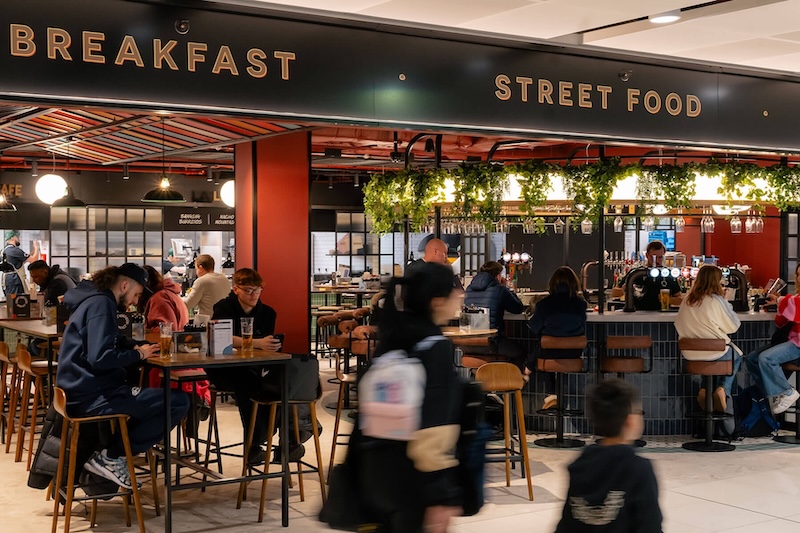
James: Great Northern Market, Manchester Airport. This is the first food market of its kind inside a UK airport, and part of a £1.3 billion transformation of Terminal 2. Three levels of prep kitchens serving eight different concepts under one roof and its own takeaway kiosk. James described the goal as building an elegant operation where every moving part worked as one. His main lesson: start the technology relationship earlier. Trialling it in other sites first could have surfaced pain points sooner.
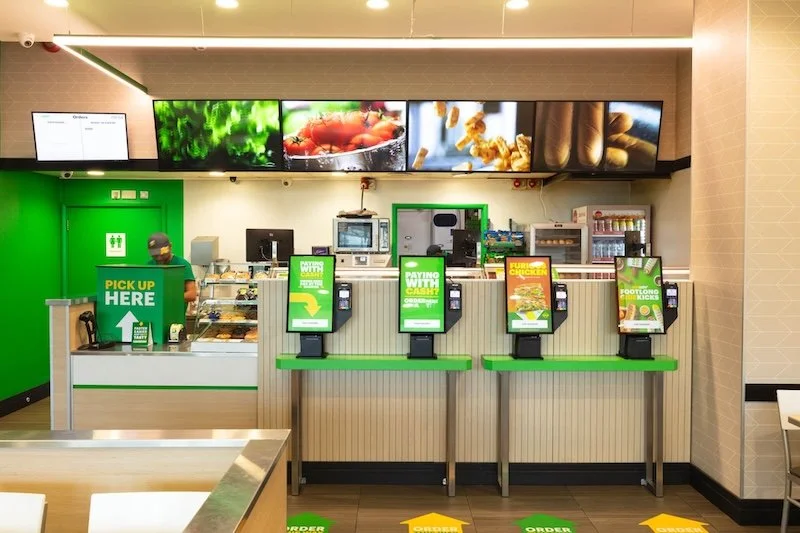
Christian: Disrupt 2.0. Subway tested installing a physical wall in front of the ordering counter, paired with kiosks, to stop customers from “walking the line” in the traditional Subway way and push them toward digital ordering. Christian judges every new concept against two lenses: is it good for the franchisee (more profitable, easier to operate), and is it good for the customer? Disrupt 2.0 scored well on the franchisee lens (orders moved through the Kitchen Display System, average transaction value rose, staff spoke to fewer customers) but split opinion on the customer lens. So it was pulled back.
Tommy: Honest Insiders and reservations. For years, Honest Burgers resisted a loyalty scheme, preferring to let restaurant managers surprise and delight guests directly. As customer habits shifted (more price-conscious, more need for certainty), the business had to break its own rules. It launched Honest Insiders, which has led to an impressive 160,000 sign-ups in year one. And Honest is now introducing table bookings across the estate. Both changes needed real operational adjustment, particularly around how managers plan table allocation now that walk-in queues are less of a given.
Menu: Complexity without the chaos
Subway’s menu supports 38 million possible order combinations. How do you keep something that complex simple and fast for the customer?
Christian explained that Subway’s menu is API-driven from a single source of truth, keeping things consistent for franchisees across markets. On the customer side, Subway has spent years teaching customers to walk the counter and build their order in person, so the current approach mirrors that familiar counter journey on kiosk first, rather than reinventing it outright. Adoption is reaching a tipping point: more repeat kiosk use, which opens the door to redesigning parts of the customer journey next.
James was candid that airport multi-brand menu management is still a pain point, given how tight the operating windows are (opening at 4am, closing as late as 11pm, with flight disruption adding unpredictability). Scheduling menus in advance, rather than asking staff to update them at the end of a shift, would remove friction rather than add it.
Tommy described Honest Burgers’ menu as deliberately, purposefully complicated. Every site runs its own local special with its own local supplier, meaning each burger might use one to three local ingredients, adding up to an estimated 50 to 75 extra suppliers across the estate. The reward is a menu that gives customers a genuine reason to visit different sites. The business has also broadened its monthly specials to three proteins at once rather than one. None of this works without strong training and process behind it. Local sourcing has become core to the brand, not a gimmick.
Format: The right tech for the right space
Christian walked through how Subway decides what format and tech go into a space. Its smallest UK site, at Farringdon station, holds exactly two people in the queue. Tech stays broadly consistent across formats. Hardware volume is what flexes: smaller sites might run two screens instead of four. For kiosks, Christian weighs up three factors: available space, order flow through peak periods, and the type of location. The team initially doubted whether a small-format 15-inch kiosk could handle Subway’s menu size. Subway has since rolled it out to more than 100 locations.
Tommy described experimenting with formats where the guest changes but the kitchen doesn’t. Honest Burgers has delivered into pubs with no kitchen of their own (in some cases from the same central kitchen serving two or three sites) and now runs this model in 12 to 15 locations. It has also piloted a kiosk at a golf venue and partnered with other entertainment venues, tapping into a younger crowd. The common thread: try a new format, keep it if it works, remove it if it doesn’t, without changing the underlying operation.
All of this is possible because orders from Kiosk, Click & Collect, Dine-in and Delivery all land in the kitchen the same way through Vita Mojo. The same ticket, the same flow. This is why Honest Burgers can try different formats without affecting the operation.
James pushed back on comparisons to high street operators, describing airport hospitality as closer to a music festival: multiple vendors, hundreds of people wanting food and drink at the same time, all heading for the same gate. A delay isn’t just inconvenient; it can mean a missed flight. That’s why Airport Retail Enterprises focuses heavily on speed-to-service data and identifying friction points in real time.
Data: What it’s really telling them
Christian said Subway’s historical lack of granular data made recent insights feel especially striking, starting with the sheer variety of orders customers put together. On loyalty, kiosk check-ins run about 8% higher than weekday POS check-ins, data that now shapes how loyalty offers are tailored. Baskets also look completely different to POS baskets: not just larger, but with a different product mix, likely because customers can browse the full menu without the social pressure of walking the counter.
James pointed to Order & Pay at Table as a major driver of data for Airport Retail Enterprises. His framing: time is the currency for airport customers, and they have little patience for the operational constraints airport hospitality deals with (security clearances for staff, delivery logistics, and more). Customers don’t see those constraints and shouldn’t have to.
Tommy talked through Honest Burgers’ use of Scout, Vita Mojo’s AI analyst. The Financial Director threw complex, multi-variable questions at Scout, and the answers matched his own manual calculations. That’s when Honest Burgers knew Scout could be trusted.
Tommy also highlighted a use case where they analysed which sites actually made money in their last trading hour, rather than assuming everywhere should stay open until close simply because that’s how it’s always been done. This led to concrete decisions being made on opening hours. A decision that could be made in minutes rather than days. Scout has freed up time across finance, food, and marketing teams who previously had to pull and cross-reference reports by hand.
What they would tell themselves if they started over
Tommy was direct: whatever’s slightly broken at five sites will be badly broken at 50. Fix processes and systems before growing, not after. Tommy also highlights what he calls the ‘Honest way’: To help avoid the trappings of tech complexity, Honest focuses on training and clear communication to cascade information down through the teams. Culture survives scale because Honest has baked it into the process.
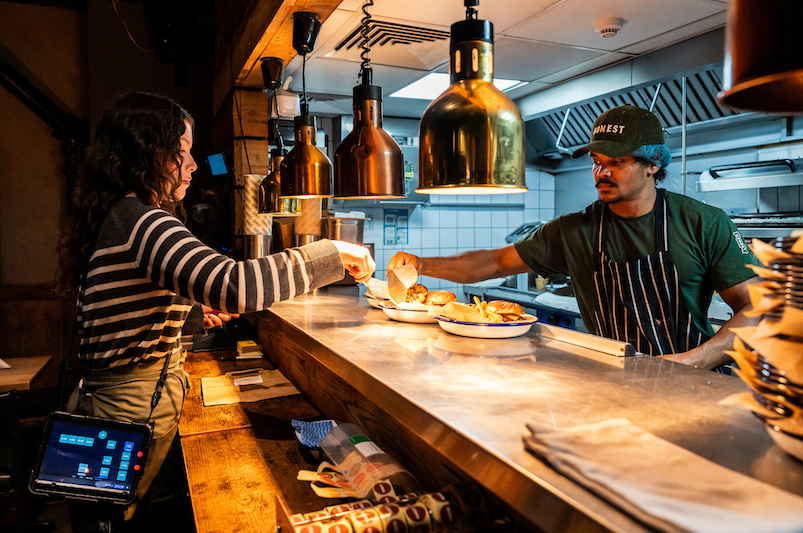
What keeps Tommy up at night are the things outside his control (shifting customer habits, ingredient and energy costs), which he prepares for rather than tries to prevent. What he can control is the tech stack: having absorbed seven former Gourmet Burger Kitchen (GBK) sites recently, Honest Burgers’ central prep kitchen is now at capacity. It’s moving to a bigger prep kitchen this summer, which should unlock growth beyond 100 sites.
James said Airport Retail Enterprises is still early in its growth journey, and the priority now is getting precise about exactly what problem customers need solved, rather than which format looks appealing. The Great Northern Market food hall concept, letting customers order from multiple brands to one table via a QR code, is starting to answer that. For James, being data-ed isn’t a nice-to-have. It’s what makes precision possible.
Christian‘s biggest lesson was about sequencing. When Subway first rolled out kiosks, there was a gap between the kiosk experience and the counter experience: payment options, loyalty earning and redemption. That gap made customer and franchisee adoption harder. Pausing for three or four months to build a more complete proposition first would likely have led to faster, broader franchisee adoption later. Subway has seen that play out over the past 18 months, as the kiosk offer has matured.
Asked how Subway stays innovative while managing 800 franchisees across multiple geographies and languages, Christian was clear: size doesn’t block innovation. Getting something off the ground is still relatively light work even at Subway’s scale. The hard part is scaling it, turning something that works at 10 sites into something that works at 1,000, and building a clear, repeatable path to get there.
One thing all three agreed on: the businesses growing fastest right now are the ones treating data, process, and technology as the foundation for growth, not an afterthought.
If you want to see what that looks like in practice, watch the full panel below…